The Structure of the Perfect Pitch
Written by Dave Bailey
Written by Dave Bailey, Feb 27, 2019What’s the ideal structure for an investor pitch deck? Here’s a science-backed formula to help you create a presentation when fundraising with VCs.
Business Summaries Aren’t Really Summaries
The need for short summaries comes up a lot in startups. Profiles, applications, emails, social media, partners, press, investment memos . . . anything from a full presentation to just a few sentences.
When the whole team is working night and day on complex problems, how are you supposed to sum up everything your company does?
The truth is you can’t. And you shouldn’t.
The goal isn’t to compress everything your company does, or list every benefit you offer your customers. A great summary is sales copy that effectively positions your company to your audience.
Lessons from the Pitch Guru
If you’re serious about pitching, I recommend reading The Startup Pitch by Chris Lipp. Chris outlines a comprehensive framework for crafting compelling pitch decks based on the most effective startup pitches of all time.
My biggest take away from Chris’s book is:
In sales pitches, presenting information in the right order makes all the difference.
How to Trigger the ‘Solution Reflex’
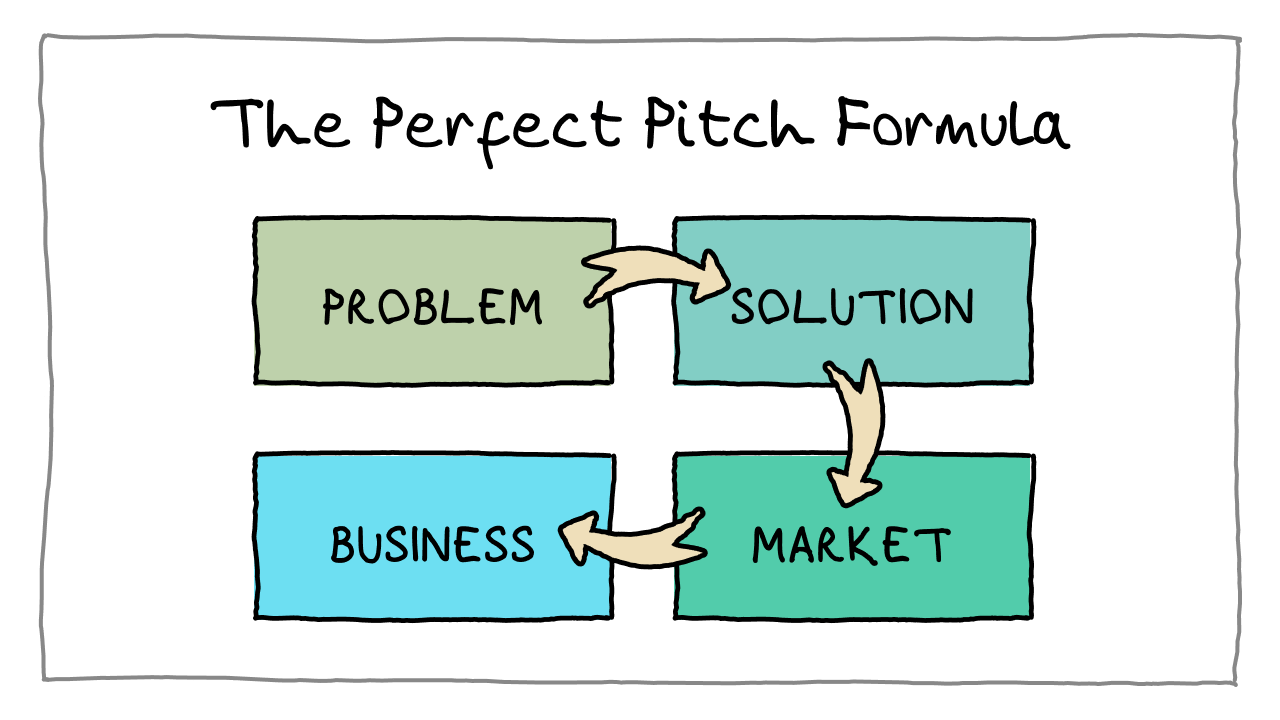
An effective presentation answers questions in these four, ordered categories:
- Problem
- Solution
- Market
- Business Model
I’ve used this approach to raise hundreds of thousands of pounds in funding from angel investors and VCs. And believe me, it works really well.
When you start with the problem, you ground your business in a real-world context. You present your business as purposeful, urgent, and user-centred. But something else happens when you tell someone about a problem. It triggers a ‘solution reflex’: when people identify with problems, they instinctively want solutions. Activating the solution reflex is a powerful way to hold someone’s attention.
A great example of the power of the solution reflex
Problems and solutions come as a pair. So do markets and business models. Describing your market demonstrates the total value your business can create.But it also presents a major problem your company faces: reaching and capturing value from this market. A well-articulated market description can trigger the solution reflex as well.
Answer These 12 Questions for a Better Summary
Answering each of the following questions in one short, clear sentence will help you formulate your business summary. Brevity and clarity are critical to creating the impact you want. This means being specific and not generalising.
What if you absolutely need two sentences to answer a question fully? Easy—don’t answer fully. Delete one of the sentences and double your impact.
In business summaries, it’s more important to be compelling than comprehensive.
Problem:
1. Description—what activity is your target customer having trouble with?
2. Pain—what specific problem do they face?
3. Key trend—what market trend is your business riding on?
Solution:
4. USP—what is your product’s unique selling proposition?
5. Benefits—what do users stop losing out on by using your product?
6. Traction—what existing data shows that customers love your product?
Market:
7. Target—what activity is your customer performing when using your product?
8. Size—how many people perform this activity in your target geography?
9. Advantages—if customers picked your best competitor, what would they miss out on?
Business Model:
10. Go to market—how will you distribute your product to your target market?
11. Revenue model—how will you charge money, and to whom?
12. Next milestones—what is the nearest, most exciting accomplishment you’re aiming for?
Reducing the Word-Count of Your Summary
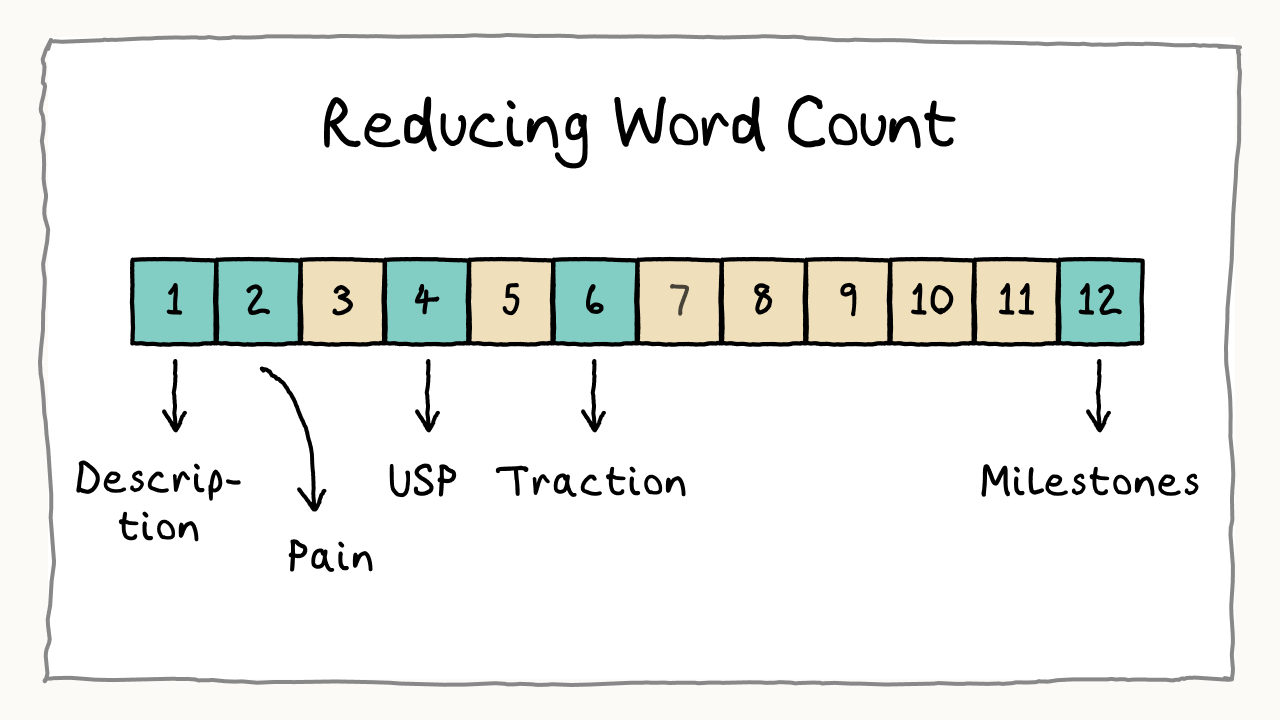
If you’ve got this far, you already have a powerful summary of your business in four paragraphs of approximately 150 words. But how do you make it shorter?
The trick is to cut out the sentences that are least relevant to the reader. The rule of thumb is that no matter the audience, always lead with the problem.
For example, a 30-word business summary could be just three sentences:
- Pain
- USP
- Benefit
A 50-word summary for potential investors could be:
- Description
- Pain
- USP
- Traction
- Next milestones
In Summary . . .
As an investor, I read a lot of business summaries and, more often than not, I’m left confused. A summary is how most people will learn about your business, one way or another. Make it great—because first impressions count.
Learn More Techniques to Attract Investors:
- Investors like founders that dream big. Here’s a formula to present a strong business vision.
- How will you run the fundraising process? Here’s a detailed guide to fundraising from timing to term sheets.
- Are you ready for the investor meeting? These are 10 behaviours to make a great first impression with a potential investor.
Join my $100M CEO newsletter ->
Originally published Feb 27, 2019, last updated Jul 19, 2026.